
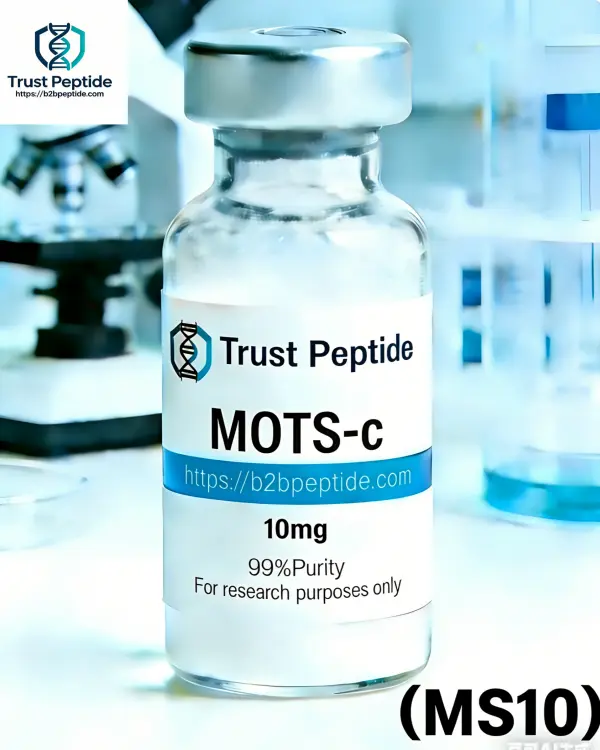
Overview of MOTS-c Peptide
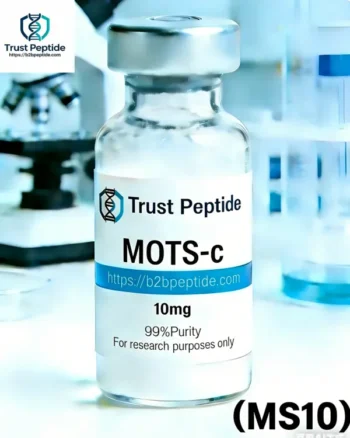
MOTS-c peptide is a mitochondrial-derived peptide that plays a significant role in cellular functions, particularly in metabolic regulation. Research indicates its potential to aid in metabolic homeostasis and its relevance to aging and stress adaptation research.
Key Research Benefits
Studies suggest that MOTS-c peptide provides several benefits relevant to researchers across domains:
- Facilitates metabolic regulation by affecting mitochondrial function.
- Promotes adaptive cellular stress responses.
- May enhance glucose metabolism and exercise performance, as research indicates.
- Shows potential in studies related to aging-related metabolic decline.
Mechanism of Action (Simplified)
MOTS-c works by interacting with nuclear and mitochondrial genes to regulate metabolic pathways. Research indicates that it plays a role in cellular stress adaptation and energy homeostasis, crossing cell membranes to act on essential biochemical pathways. Additionally, its ability to influence insulin sensitivity has garnered significant research interest.
Technical & Storage Specifications
Researchers should adhere to the following specifications for proper handling:
| Purity | ≥99% |
| Appearance | White Lyophilized Powder |
| Storage | Store at -20°C for prolonged shelf-life; reconstituted solutions should be kept at 4°C and used promptly. |
Frequently Asked Questions (FAQ)
1. What is the difference between MOTS-c and other mitochondrial peptides?
MOTS-c is distinct in its ability to regulate metabolism through nuclear-mitochondrial interactions, which sets it apart from other mitochondrial-derived peptides.
2. How should MOTS-c peptide be stored after reconstitution?
Once reconstituted, it should be stored at 4°C and used within a short time frame to preserve stability and efficacy.
3. Is third-party testing (CoA) available?
Yes, Certificates of Analysis (CoA) are available upon request, ensuring rigorous third-party purity and quality verification.



1 review for MOTS-c
There are no reviews yet.