
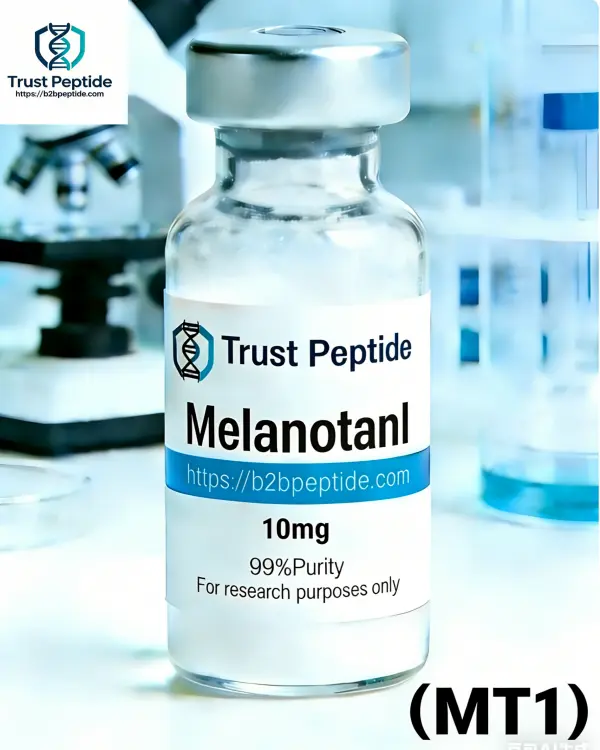
What is Melanotan I Peptide?
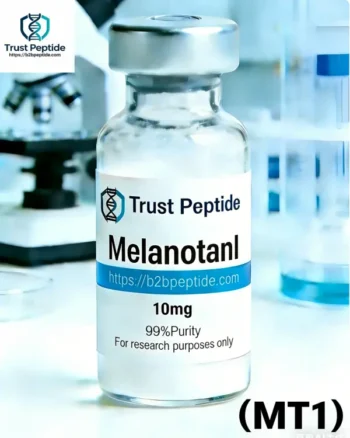
Melanotan I (MT-1) is a synthetic peptide variant modeled after the native alpha-melanocyte-stimulating hormone (α-MSH). Research indicates its primary purpose lies in studying its role in melanogenesis, or the regulation of pigmentation processes, within the field of dermatological research.
Key Research Benefits
Studies suggest Melanotan I peptide demonstrates promising outcomes in several contexts. Key potential benefits include:
- Contribution to detailed pigmentation studies
- Insights into UV radiation protection mechanisms
- Exploration of melanogenesis modulation
- Facilitation of research on skin-related disorders
Mechanism of Action
Melanotan I functions by mimicking the activity of alpha-melanocyte-stimulating hormone, binding to melanocortin receptors, particularly MC1R. This interaction stimulates the production of melanin, which is the body’s natural pigmentation compound. While its primary mechanism is well-studied, ongoing research focuses on the broader implications of this receptor interaction, including potential neurobiological effects.
Technical & Storage Specifications
For optimal performance and longer-term research usability, take note of the following technical details:
| Specification | Details |
|---|---|
| Purity | >99% |
| Appearance | White lyophilized powder |
| Storage Requirements | Keep at -20°C (unreconstituted); store reconstituted solutions at 2-8°C |
Frequently Asked Questions
What is the difference between Melanotan I and Melanotan II? While both peptides are analogs of α-MSH, Melanotan I primarily focuses on melanogenesis, whereas Melanotan II has additional effects, including appetite modulation and other systemic actions.
How should Melanotan I be stored after reconstitution? After reconstitution, the peptide should be stored at 2-8°C and used within a specified time frame to ensure stability and effectiveness.
Is third-party testing (CoA) available? Yes, a Certificate of Analysis (CoA) is available upon request to confirm the product’s quality and purity levels.


1 review for MelanotanI