
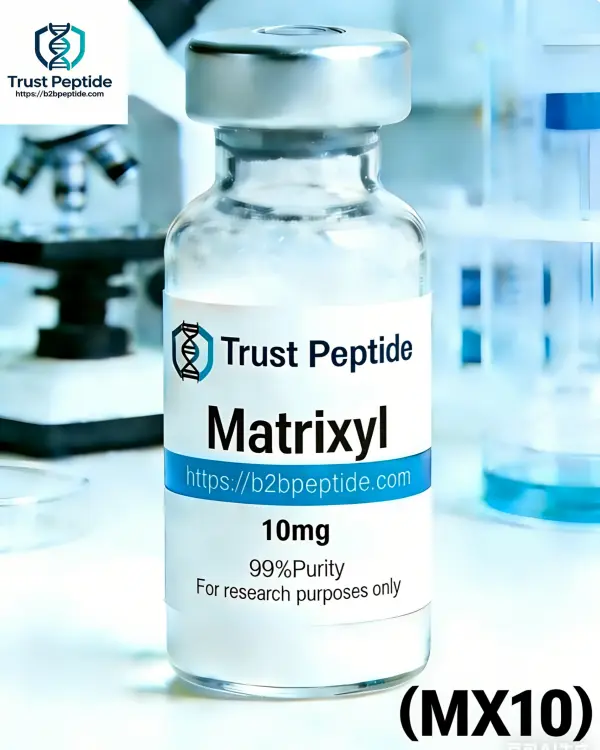
Matrixyl Peptide: Overview
Matrixyl is a widely studied peptide primarily used in research on skin aging mechanisms and collagen synthesis. Known for its role in enhancing extracellular matrix activity, studies suggest its utility for understanding skin repair and anti-aging pathways.
Key Research Benefits
Research indicates the following potential applications of Matrixyl Peptide:
- Facilitates collagen production under controlled experimental conditions.
- Supports studies into dermal repair and elasticity research models.
- Potential tool for investigating cellular signaling pathways linked to skin aging.
Mechanism of Action
Matrixyl functions through targeted peptide signaling. The peptide interacts with receptors in fibroblasts, prompting collagen production. This simplified mechanism makes it a valuable tool in studying the relationship between peptides and extracellular matrix remodeling.
Technical & Storage Specifications
Researchers should adhere to the following technical details for optimal use:
| Specification | Details |
|---|---|
| Purity | >99% |
| Appearance | White to off-white powder |
| Storage | Store at -20°C (stable for up to 2 years in powder form). |
Frequently Asked Questions
What is the difference between Matrixyl and similar peptides? Matrixyl specifically refers to a peptide complex shown to stimulate collagen synthesis, making it distinct in skin aging research.
How should it be stored after reconstitution? Reconstituted solutions should be stored at 4°C for short-term use or at -20°C for prolonged periods to maintain stability.
Is third-party testing (CoA) available? Yes, a certificate of analysis (CoA) is provided with every batch to ensure quality and compliance.

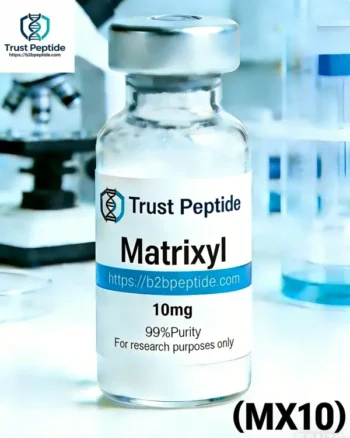


1 review for Matrixyl
There are no reviews yet.