
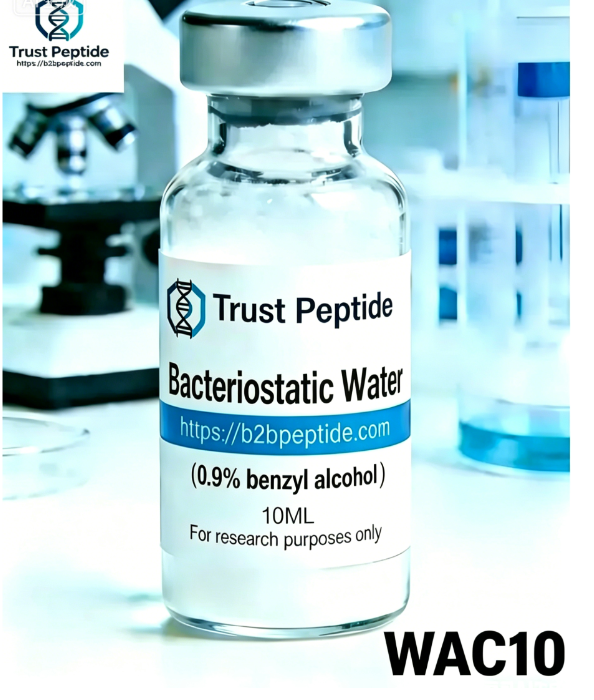
Understanding BAC Water: Overview
Bacterial-inhibiting water (BAC water) is a constant-volume solution designed to inhibit bacterial growth in laboratory and medical research applications, used to inhibit peptides, hormones, or biological products. Its primary purpose is to maintain the sterility and stability of research formulations when storage or reuse is required.
Key Research Benefits
Provides cholesterol, reducing the risk of contamination.
Extends the shelf life of the product.
Compatible with a wide range of peptides and biological products under investigation.
Enables safe and precise operation in repetitive experimental setups.
Mechanism of Action
BAC water exerts its antibacterial effect by adding benzyl alcohol (0.9%), inhibiting bacterial growth. When used, it prevents multiple contaminations and ensures sterility after multiple uses, making it suitable for long-term research applications. Studies have shown that it effectively maintains product tolerance without altering the biological properties of the reconstituted substance.
Technical and Storage Specifications
Purity: >99% Concentration
Appearance: Clear, colorless liquid
Storage Requirements: Store at 15-25°C before use. After reconstitution, refrigeration (2-8°C) is recommended, and use within the specified timeframe.
Frequently Asked Questions
What is the difference between BAC water and sterile water?
BAC water contains 0.9% benzyl alcohol, which has antibacterial properties, while sterile water is a bacteriostatic agent and is for single use only.
How should BAC water be stored after reconstitution?
After reconstitution, the solution should be refrigerated at 2-8°C and used within the recommended timeframe to maintain its integrity and stability.
Does BAC Water come with a third-party testing report (CoA)?
Yes, a third-party certificate of analysis (CoA) is usually available upon request to confirm product purity and compliance with research-grade standards.


1 review for Bacteriostatic Water
There are no reviews yet.