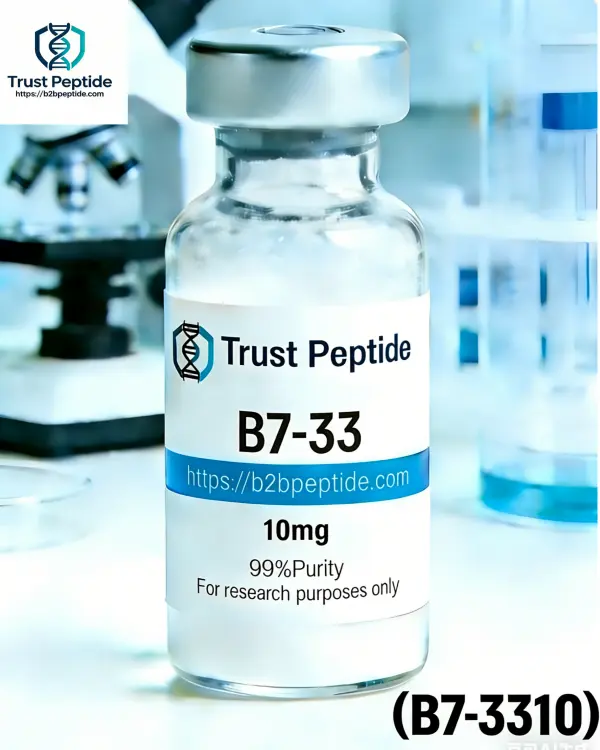
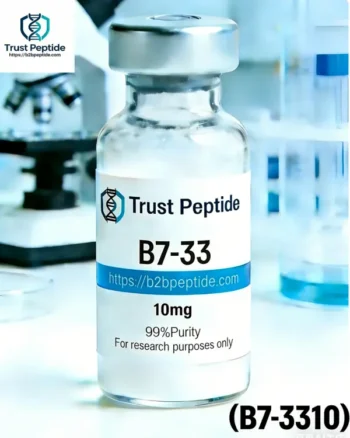
What is B7-33 Peptide?
B7-33 Peptide is a synthetic analog designed to emulate specific therapeutic properties observed in naturally occurring peptides. Research suggests its primary applications may include tissue repair and anti-fibrotic effects, making it a subject of interest in cellular and molecular studies.
Key Research Benefits
B7-33 Peptide has shown potential in various research areas:
- Studies indicate its role in reducing fibrosis through selective modulation of macrophage activity.
- Research suggests it promotes tissue regeneration while minimizing scar formation.
- May offer anti-inflammatory properties by interacting with cell signaling pathways.
- Its functional design provides a targeted approach to physiological repair mechanisms.
Mechanism of Action
B7-33 Peptide works by interacting with specific receptors, such as the relaxin receptor RXFP1. Research indicates this interaction influences transcription factors responsible for inflammatory and fibrotic processes. Simplified, the peptide modulates cellular responses to promote repair and reduce scarring without triggering immune hypersensitivity commonly associated with other agents.
Technical & Storage Specifications
Below are the technical and storage details to assist institutional buyers:
| Parameter | Details |
|---|---|
| Purity | >99% |
| Appearance | Lyophilized powder |
| Storage | -20°C (long-term); Avoid repeated freeze-thaw cycles |
| Reconstitution | Dissolve in sterile water or PBS |
FAQ
What is the difference between B7-33 Peptide and other anti-fibrotic agents?
B7-33 selectively targets the RXFP1 receptor, offering a more specific and potentially safer mechanism of action compared to traditional broad-spectrum anti-fibrotic drugs.
How should B7-33 Peptide be stored after reconstitution?
Once reconstituted, B7-33 Peptide should be stored at 4°C for short-term use (up to 2 weeks) or frozen at -20°C for extended periods. Use sterile techniques to avoid contamination.
Is third-party testing (CoA) available for this product?
Yes, a Certificate of Analysis (CoA) from third-party testing is available upon request to verify peptide purity, composition, and compliance with research-grade standards.


1 review for B7-33
There are no reviews yet.