
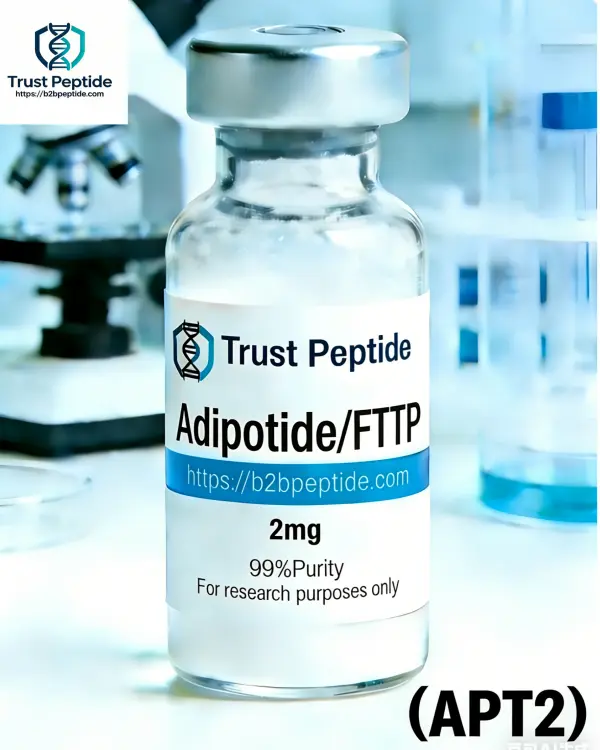
What Is Adipotide/FTTP Peptide?
Adipotide, also known as FTTP Peptide, is an experimental compound designed to target specific cellular pathways involved in fat tissue modulation. Research indicates its primary application lies in studying metabolic processes related to adipose composition.
Key Research Benefits
Studies suggest that Adipotide/FTTP delivers the following potential research benefits:
- Selective targeting of adipose tissue vasculature.
- Potential insights into metabolic optimization pathways.
- Application in studying adipose tissue reduction mechanisms without altering skeletal muscle.
Mechanism of Action (Simplified)
Adipotide works by binding to specific receptors found on the blood vessels that nourish fat cells. This disrupts their vascular supply, leading to the targeted reduction of fat tissue. Research indicates that this mechanism does not affect surrounding non-adipose tissues, making it a focus of interest in metabolic studies.
Technical & Storage Specifications
The following table summarizes key technical data and storage requirements:
| Specification | Details |
|---|---|
| Purity | >99% |
| Appearance | White lyophilized powder |
| Storage | Keep at -20°C before reconstitution; after reconstitution, store at 4°C for short-term use or -20°C for extended storage. |
Frequently Asked Questions
1. What is the difference between Adipotide (FTTP) and other peptides like P21?
Adipotide focuses on fat tissue-specific pathways, whereas peptides like P21 are primarily researched for neurological applications.
2. How should Adipotide be stored after reconstitution?
For best results, store the reconstituted peptide at 4°C for up to one week or at -20°C for longer periods. Avoid multiple freeze-thaw cycles.
3. Is third-party testing (CoA) available?
Yes, Certificates of Analysis (CoA) confirming purity and quality are available upon request to ensure research-grade standards.





1 review for Adipotide/FTTP
There are no reviews yet.