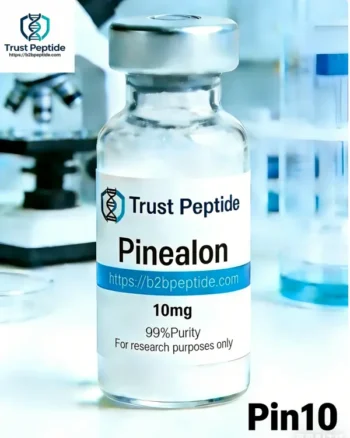
What is Pinealon Peptide?
Pinealon peptide is a synthetic tripeptide designed to facilitate cognitive and neuroprotective research. Studies suggest its primary use is exploring cellular regulation and its potential impact on neurological pathways.
Key Research Benefits
Research highlights the following potential benefits of Pinealon peptide:
- May support cognitive enhancement in certain experimental models.
- Research indicates involvement in neurogenesis stimulation.
- Could aid in the regulation of oxidative stress-related pathways.
- Potential application in understanding age-related neural decline.
Mechanism of Action (Simplified)
Research indicates that Pinealon peptide crosses the blood-brain barrier (BBB), where it may interact with cellular pathways to support neural function. The peptide is thought to influence processes like protein synthesis and oxidative regulation at the cellular level, which are critical for overall brain health in experimental settings.
Technical & Storage Specs
Below is a concise technical overview:
| Specification | Detail |
|---|---|
| Purity | >99% |
| Appearance | White lyophilized powder |
| Storage Conditions | -20°C (long term); 2-8°C (after reconstitution) |
Frequently Asked Questions
Q: What is the difference between Pinealon and other tripeptides?
A: Pinealon is specifically composed of three amino acids (Glu-Asp-Arg) and has a targeted focus on neural research, making it distinct from other tripeptides used for metabolic or cellular studies.
Q: How should it be stored after reconstitution?
A: Once reconstituted, Pinealon peptide should be stored at 2-8°C and used within a specified timeframe to maintain stability.
Q: Is third-party testing (CoA) available?
A: Yes, Pinealon peptides are accompanied by a Certificate of Analysis (CoA) from a third-party laboratory to ensure purity and quality compliance.


Reviews
There are no reviews yet.