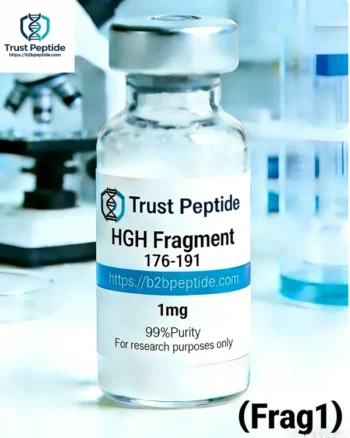
What is HGH Fragment 176-191 Peptide?
HGH Fragment 176-191 is a synthetic peptide derived from the amino acids 176-191 of the human growth hormone (hGH). Research indicates its primary focus lies in investigating metabolic processes and fat metabolism without directly influencing insulin levels or growth factors.
Key Research Benefits
Studies suggest several potential applications of HGH Fragment 176-191 under controlled environments:
- Enhances fat oxidation, particularly in adipose (fat) tissue.
- Supports investigations into energy homeostasis and metabolic syndromes.
- Does not affect growth hormone receptors, making it ideal for targeted research.
- Stable biological activity confirmed under various temperature conditions.
Mechanism of Action
HGH Fragment 176-191 works by selectively mimicking the regulatory region of the human growth hormone responsible for lipolytic (fat breakdown) activities. Unlike full-length hGH, this fragment is non-binding to growth hormone receptors and instead interacts directly with fat cells to stimulate energy expenditure. Notably, research indicates that it bypasses insulin pathways, minimizing potential metabolic disruptions.
Technical Specifications
Below is a quick overview of the technical specifications for ease of use in research applications:
| Specification | Details |
|---|---|
| Purity | >99% |
| Appearance | White Lyophilized Powder |
| Storage Requirements | -20°C (unreconstituted), 2-8°C (after reconstitution) |
Frequently Asked Questions
Q: What is the difference between HGH Fragment 176-191 and full-length hGH?
A: HGH Fragment 176-191 is a specific segment of the full human growth hormone. It is designed to focus on fat metabolism without binding to growth hormone receptors or affecting insulin pathways, unlike full-length hGH.
Q: How should it be stored after reconstitution?
A: After reconstitution with sterile water, the sample should be stored at 2-8°C and used within a prescribed period, usually 7-10 days, to maintain integrity.
Q: Is third-party testing (CoA) available?
A: Yes, Certificates of Analysis (CoA) from third-party laboratories are available upon request to verify purity, quality, and consistency.


Reviews
There are no reviews yet.