
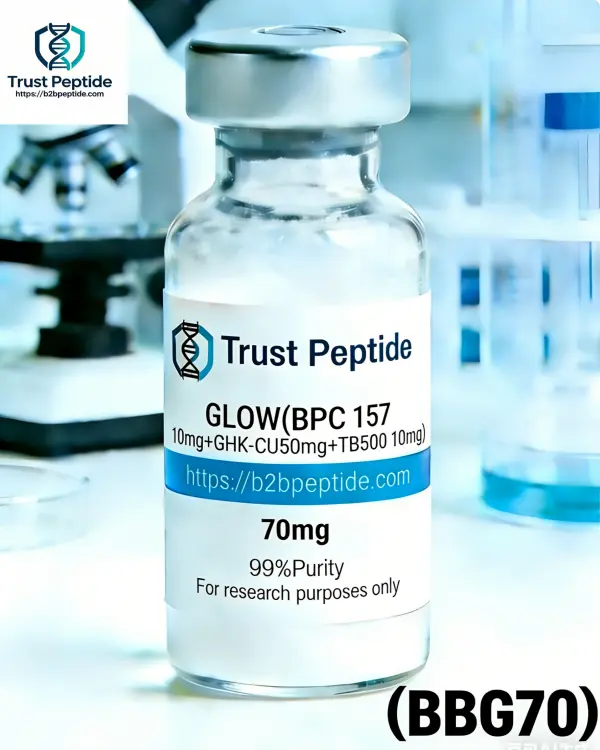
Overview: What is GLOW Peptide?
GLOW (BPC 157 10mg + GHK-CU 50mg + TB500 10mg) combines three well-researched peptides thought to support various biological processes relevant to cellular repair and regeneration. This formulation is primarily utilized by institutional researchers and advanced individuals exploring advanced biohacking opportunities.
Key Research Benefits
Studies suggest this peptide combination offers the following potential benefits:
- Supports tissue repair and regeneration in experimental models.
- Promotes angiogenesis, which may enhance vascular health in certain studies.
- Facilitates skin remodeling and collagen production as indicated by preliminary research.
- May modulate inflammation pathways in bio-simulated settings.
Mechanism of Action (Simplified)
The peptides within GLOW operate via distinct yet synergistic mechanisms:
- BPC 157: Research indicates it interacts with growth factors to aid tissue healing and cellular response.
- GHK-CU: A copper-binding peptide that supports cellular oxidative balance and collagen-related enzymatic functions.
- TB500: Thought to enhance cellular migration during tissue repair processes, potentially aiding recovery dynamics.
Technical & Storage Specifications
Below are standardized details for institutional and laboratory settings:
| Specification | Details |
|---|---|
| Purity | >99% |
| Appearance | White Lyophilized Powder |
| Storage | Store at -20°C before reconstitution; once reconstituted, use within 7 days if refrigerated (2-8°C). |
Frequently Asked Questions (FAQ)
What is the difference between P21 and P021?
P21 is a peptide investigated for specific neurological pathways, while P021 refers to chemokine-like activity in cellular environments. Ensure to use nomenclature accurately in research contexts.
How should it be stored after reconstitution?
After reconstitution, peptides should be refrigerated (2-8°C) and utilized within 7 days to maintain stability.
Is third-party testing (CoA) available?
Yes, GLOW is accompanied by a Certificate of Analysis (CoA) from an independent laboratory to verify purity and quality standards.


1 review for GLOW(BPC 157 10mg+GHK-CU50mg+TB500 10mg)
There are no reviews yet.