
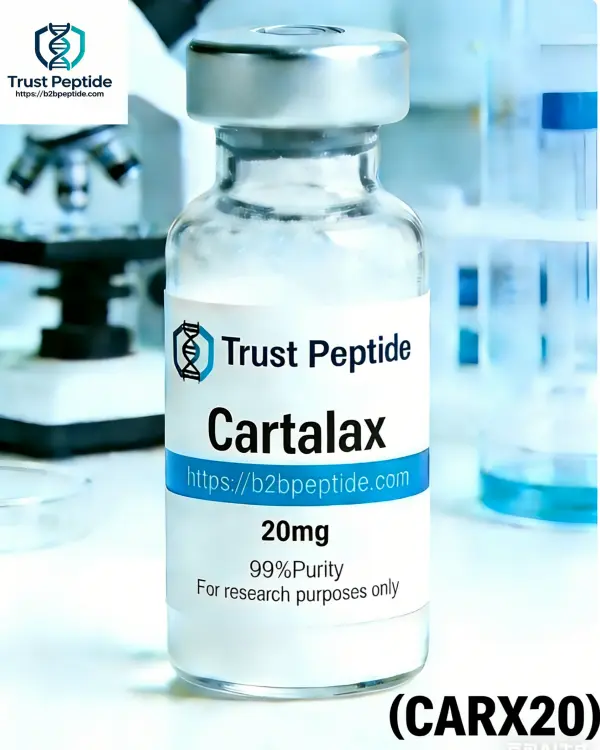
What is Cartalax Peptide?
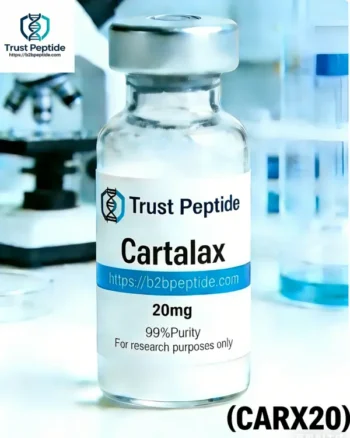
Cartalax peptide is a synthetic bioregulator commonly studied for its role in promoting cellular function and tissue regeneration. Research indicates that this peptide holds potential for applications in both basic science and experimental studies targeted at organ-specific optimization.
Key Research Benefits
Studies suggest that Cartalax peptide may offer the following research-based benefits:
- Support for tissue regeneration through cellular signaling pathways.
- Facilitation of metabolic balance at the cellular level.
- Potential role in enhancing organ-specific cellular function.
- Extended shelf life when stored under appropriate conditions, making it practical for varied research timelines.
Mechanism of Action (Simplified)
Cartalax peptide is thought to work by interacting with specific proteins at the cellular level, potentially influencing transcription factors essential for cellular repair and regeneration. Research indicates its ability to cross key biological barriers, allowing targeted interactions in the tissues of interest. This action makes it a subject of ongoing interest in studies related to bio-signaling and tissue-specific applications.
Technical & Storage Specifications
The following key details ensure proper handling and use:
| Specification | Details |
|---|---|
| Purity | >99% |
| Appearance | White lyophilized powder |
| Storage Requirements | Store at -20°C (dry environment). Reconstituted solution should be stored at +4°C for short durations. |
Frequently Asked Questions
1. What is the difference between P21 and P021?
P21 refers to a specific protein involved in cell cycle regulation, while P021 is a neuropeptide being studied for its cognitive effects. They are entirely different in structure and function.
2. How should it be stored after reconstitution?
Once reconstituted, Cartalax peptide should be stored at +4°C and used within a short timeframe to maintain stability.
3. Is third-party testing (CoA) available?
Yes, all batches of Cartalax peptide come with a Certificate of Analysis (CoA) from an independent third-party laboratory, ensuring quality and purity verification.


1 review for Cartalax
There are no reviews yet.