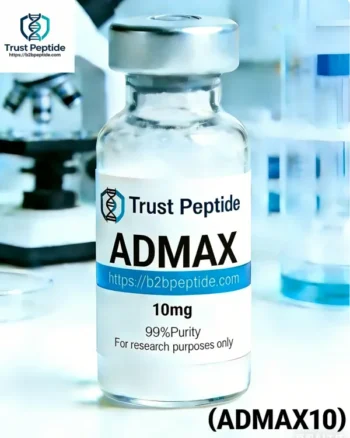
Overview: What is ADMAX Peptide?
ADMAX Peptide is a high-purity research compound designed to support studies addressing neurogenesis and potential cognitive pathways. Its chemical properties and purity standards make it suitable for institutional researchers and advanced individual users exploring theoretical applications in the biohacking and neuroscience fields.
Key Research Benefits
Research indicates that ADMAX Peptide may offer the following benefits:
- Potential support for cognitive enhancement and memory-related studies.
- May stimulate pathways associated with neurogenesis, according to animal model studies.
- Could play a role in supporting resilience to neural degeneration under certain conditions.
Mechanism of Action (Simplified)
ADMAX Peptide operates by crossing the blood-brain barrier (BBB) and interacting with neural receptors to modulate critical pathways theorized to impact neuroplasticity. Research suggests that the peptide may enhance synaptic transmission efficiency, thereby influencing key networks associated with cognition and memory.
Technical & Storage Specifications
For the detailed technical use of ADMAX Peptide, refer to the specifications below:
| Feature | Specification |
|---|---|
| Purity | > 99% |
| Appearance | White Lyophilized Powder |
| Storage (Unreconstituted) | -20°C |
| Storage (Reconstituted) | 4°C (short-term), -20°C (long-term) |
FAQs
What is the difference between P21 and P021?
P21 and P021 differ in their amino acid sequences, which impact their mechanisms of action and functional targets, though both are used in neurocognitive applications.
How should it be stored after reconstitution?
Once reconstituted, ADMAX Peptide should be stored at 4°C if used within 48 hours or at -20°C for longer durations to maintain stability.
Is third-party testing (CoA) available?
Yes, a Certificate of Analysis (CoA) is available upon request to validate purity and quality standards.


Reviews
There are no reviews yet.