
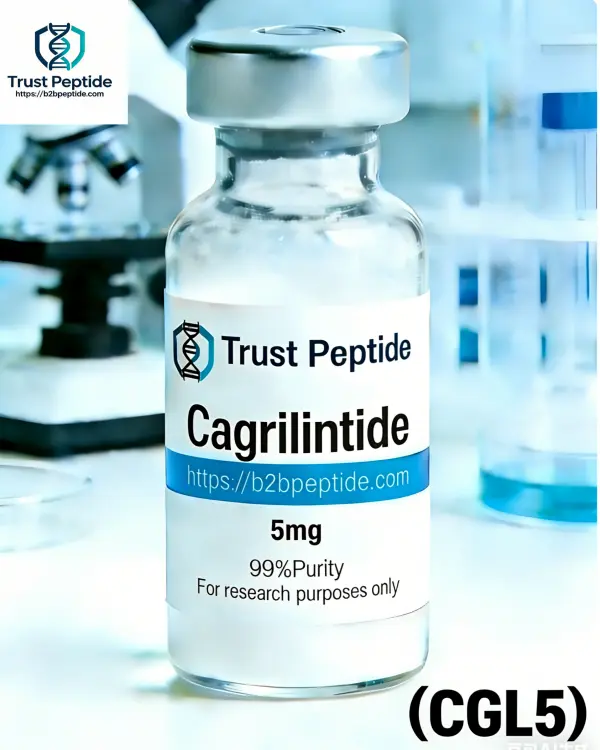
Overview: What is Cagrilintide Peptide?
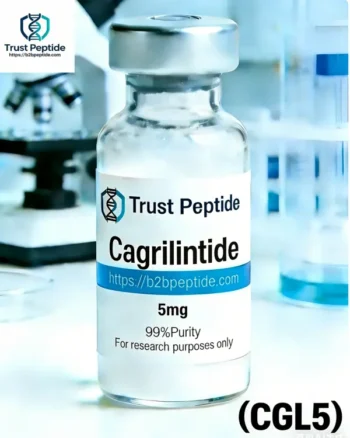
Cagrilintide is an investigational peptide primarily researched for its potential role in appetite modulation and energy balance regulation within the body. Studies suggest its practical applications lie in metabolic research and appetite signaling pathways.
Key Research Benefits
Current research has identified the following potential benefits of Cagrilintide:
- Supports examination of appetite suppression mechanisms.
- Facilitates studies on weight regulation in metabolic models.
- Analyzes effects on glucagon-like peptide-1 (GLP-1)-related pathways.
- Explores its synergy with other compounds for energy balance studies.
Mechanism of Action (Simplified)
Cagrilintide functions as a long-acting amylin analog, interacting with receptors in the brain responsible for appetite control. By indirectly influencing hypothalamic signaling, it supports metabolic research while exhibiting extended bioavailability due to its structural modifications.
Technical & Storage Specifications
Below are the key parameters for research-grade Cagrilintide:
| Parameter | Specification |
|---|---|
| Purity | >99% |
| Appearance | White lyophilized powder |
| Storage Conditions (Dry) | -20°C |
| Reconstitution | Store at 2–8°C, use within 7 days |
FAQ
What is the difference between P21 and P021? While similar in naming, P21 and P021 refer to two distinct peptides with different biological roles and research applications. Always consult the product specifications.
How should it be stored after reconstitution? After reconstitution, Cagrilintide should be stored at 2–8°C and used within 7 days for optimal consistency.
Is third-party testing (CoA) available? Yes, third-party-verified Certificates of Analysis (CoAs) are provided upon request to ensure product purity and quality compliance.


1 review for Cagrilintide